
Hypnotherapy for Better Sleep: Can It Help Insomnia?
Yes, hypnotherapy can help improve sleep quality and reduce insomnia by calming the mind, easing racing thoughts, and creating a deeper state of relaxation. It works by breaking negative sleep patterns and encouraging the body to naturally drift into rest.
Many people who struggle with sleepless nights find hypnotherapy a safe, drug-free option worth exploring. While it’s not a cure for every sleep disorder, research shows it can support healthier sleep when paired with good habits and professional guidance.
Read below to learn what hypnotherapy is, how it works for sleep, the science behind it, what to expect in a session, and practical tips you can try.
Understanding Sleep and Insomnia
What Is Sleep Quality?
Good sleep isn’t just about how long you’re in bed—it’s about how well your body and mind rest during that time. Quality sleep has three main parts:
- Duration – getting enough hours of rest, usually 7–9 for most adults.
- Depth – reaching deep, restorative stages where the brain and body repair.
- Continuity – staying asleep through the night without long awakenings.
Signs of poor sleep quality include waking up tired even after a full night, needing naps to get through the day, or struggling to focus on simple tasks. If you often feel “wired but tired,” that’s another sign your sleep cycles aren’t working as they should.
What Is Insomnia?
Insomnia is more than an occasional sleepless night—it’s a pattern of trouble that affects daily life. The most common signs are:
- Taking a long time to fall asleep.
- Waking up in the middle of the night and not falling back asleep.
- Waking too early and feeling unrefreshed.
There are two main types:
- Acute insomnia – short-term, often triggered by stress, travel, or a major event.
- Chronic insomnia – ongoing, lasting weeks or months, and often tied to deeper issues.
Common Causes of Insomnia
Sleep troubles rarely happen for one reason alone. Often, it’s a mix of triggers that build over time, such as:
- Stress and anxiety – racing thoughts, overthinking, and worrying keep the brain on alert.
- Poor habits – late-night screen use, caffeine, irregular schedules.
- Lifestyle factors – shift work, travel, lack of physical activity.
- Medical issues – pain, hormonal changes, breathing problems, or side effects from medication.
- Mental health – depression or PTSD can also disturb natural sleep rhythms.
Why It Matters
Think of sleep like the body’s nightly reset button. Without it, energy, mood, and health all take a hit. Chronic insomnia isn’t just about feeling tired—it raises the risk of heart disease, diabetes, weight gain, and lowered immunity. It also affects memory and decision-making, which is why even one rough week of poor sleep can feel like walking through fog.
What Is Hypnotherapy and How Does It Work?
The Basics of Hypnotherapy
Hypnotherapy is a form of guided relaxation that helps people focus deeply and become more open to positive suggestions. It’s not about losing control—it’s about entering a calm, focused state, much like the feeling right before you fall asleep or get lost in a daydream.
In this state, the mind is more receptive to ideas that can change unhelpful thought patterns, ease stress, and encourage healthier behaviors.
Myths vs. Facts About Hypnotherapy
Many people picture stage shows where someone clucks like a chicken under hypnosis. That’s entertainment, not therapy. In reality:
- You don’t lose consciousness—you remain aware and in control.
- You can’t be forced to do something against your will.
- The goal is relaxation and focus, not trickery.
By clearing up these myths, it’s easier to understand why hypnotherapy is taken seriously in clinical settings for issues like pain management, anxiety, and sleep.
The Role of Hypnotherapy in Mental and Physical Health
Hypnotherapy has been used for decades to help people manage stress, overcome fears, and break habits like smoking. In terms of physical health, it’s been applied for pain relief, digestive issues, and even managing blood pressure.
When it comes to sleep, hypnotherapy works by quieting the overactive mind, teaching the body to relax, and reframing negative associations with bedtime. Think of it as pressing “reset” on the mental noise that keeps you awake.
How Hypnotherapy May Improve Sleep Quality
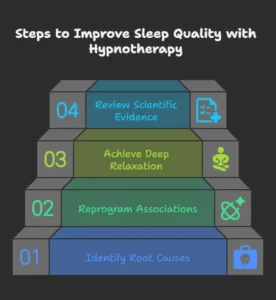 Sleep doesn’t always slip in just because we turn off the lights. For many people, the harder they try, the further away rest seems. This is where hypnotherapy steps in as a gentle way to quiet both the mind and body.
Targeting the Root Causes of Insomnia
Most people with insomnia aren’t kept awake by random chance—it’s usually stress, anxiety, or mental overactivity. Hypnotherapy helps by slowing racing thoughts and easing the body’s “fight-or-flight” response. With the mind calm, sleep begins to feel natural instead of forced.
Reprogramming Negative Sleep Associations
If you’ve spent nights staring at the ceiling, your brain may start to connect bedtime with frustration. Hypnotherapy interrupts this cycle by introducing new, positive associations—helping the brain link the bed with comfort and rest again. Think of it like rewriting an old script with a new ending.
Deep Relaxation and the Body’s Response
Hypnotherapy also works on the body, not just the mind. It slows breathing, lowers heart rate, and relaxes tense muscles. This mirrors what naturally happens as we drift into sleep, making the transition from wakefulness to rest much smoother.
Scientific Evidence and Studies
Studies suggest hypnosis can increase time spent in deep, restorative sleep and reduce nighttime awakenings. Research also shows it may benefit people with stress-related insomnia more than basic relaxation alone. Results can vary, but evidence points to hypnotherapy as a promising support for better sleep.
What to Expect in a Hypnotherapy Session for Sleep
Walking into your first hypnotherapy session can feel uncertain, but the process is simple and relaxing. The goal isn’t to put you “under”—it’s to guide you into a calm state where sleep-friendly suggestions can settle in more easily.
The Process Step by Step
A typical hypnotherapy session is calm and structured. Here’s what usually happens:
- Initial consultation – the therapist asks about your sleep patterns, lifestyle, and triggers that may affect rest.
- Induction phase – you’re guided into a deeply relaxed state using breathing, visualization, or calming suggestions.
- Therapeutic suggestions – once relaxed, the therapist introduces positive ideas such as “you feel safe and calm at bedtime” or “your mind slows down at night.”
- Return to awareness – you’re gently guided back to normal alertness, often feeling refreshed and relaxed.
Most people stay aware throughout, but the deep focus makes the suggestions more effective.
Different Approaches Used
Hypnotherapy for sleep can take different forms:
- In-person sessions – working directly with a certified hypnotherapist.
- Self-hypnosis – simple techniques you can learn to calm yourself before bed.
- Audio recordings or apps – guided hypnosis you can play at night to reinforce positive sleep cues.
Many people mix professional sessions with self-hypnosis or recordings for consistent support at home.
Comparing Hypnotherapy With Other Sleep Treatments
When sleep struggles drag on, most people first turn to familiar fixes—better habits, therapy, or medication. Hypnotherapy isn’t a replacement for these, but it can play a valuable supporting role.
Traditional Approaches
Before considering hypnotherapy, most people try common sleep solutions:
- Sleep hygiene – setting a regular bedtime, limiting caffeine, and reducing screen time.
- Cognitive Behavioral Therapy for Insomnia (CBT-I) – widely recommended, this approach helps people change unhelpful thoughts and habits around sleep.
- Medications – sleeping pills can bring quick relief but often carry side effects, risk of dependency, and don’t address the root causes of insomnia.
Where Hypnotherapy Fits In
Hypnotherapy is not meant to replace medical treatment or CBT-I but can serve as a supportive, complementary option. It’s especially helpful for people whose insomnia is tied to stress, anxiety, or negative bedtime associations.
Think of it as another tool in the sleep toolkit—one that may work best when combined with healthy routines and, if needed, professional therapy or medical care. For many, it offers a gentler alternative to medication and a way to retrain the mind for better rest.
Potential Benefits and Risks
Like any sleep method, hypnotherapy has its strengths and limitations. Knowing both sides helps set realistic expectations before you try it.
Benefits of Hypnotherapy for Sleep
Hypnotherapy offers several appealing advantages for people struggling with insomnia:
- Drug-free – avoids the side effects and dependency risks of sleeping pills.
- Promotes relaxation – helps both the mind and body release tension before bed.
- Reduces anxiety – quiets the racing thoughts that often delay sleep.
- Improves sleep patterns – some studies suggest deeper, more consistent rest.
- Boosts overall well-being – better sleep leads to sharper focus, improved mood, and more energy.
Risks and Considerations
While generally safe, hypnotherapy isn’t right for everyone:
- Mixed results – some people notice improvement quickly, while others see little change.
- Dependence on guidance – beginners may find self-hypnosis harder without professional support.
- Unqualified practitioners – working with someone inexperienced can reduce results or cause frustration.
- Mild side effects – occasional drowsiness, emotional release, or vivid dreams.
The best approach is to see hypnotherapy as part of a broader plan for better sleep—not a cure-all. Choosing a qualified professional greatly increases the chances of success.
Practical Tips for Using Hypnotherapy for Better Sleep
Trying hypnotherapy doesn’t have to feel overwhelming. With the right support and a few simple habits, you can make it a natural part of your nightly routine.
Finding the Right Hypnotherapist
The effectiveness of hypnotherapy often depends on the practitioner. To choose wisely:
- Look for certifications in hypnotherapy or clinical hypnosis.
- Ask about experience specifically with sleep issues.
- Check reviews, referrals, or professional associations for credibility.
- Schedule a consultation first—comfort and trust matter for progress.
At-Home Supportive Practices
Even outside a therapist’s office, you can strengthen results with simple steps:
- Self-hypnosis – learn calming techniques like visualization or guided breathing before bed.
- Audio recordings or apps – use trusted guided sessions to reinforce relaxation.
- Good sleep hygiene – keep your room cool, dark, and quiet; avoid caffeine late in the day; keep a consistent bedtime.
- Bedtime relaxation – pair hypnotherapy with light stretching, meditation, or progressive muscle relaxation.
Together, these practices make it easier for your brain to connect bedtime with rest and reset your sleep patterns over time.
Conclusion
Better sleep isn’t about chasing the perfect routine—it’s about finding what helps your body and mind finally switch off at night. Hypnotherapy offers a gentle, practical way to make that shift.
By calming racing thoughts, resetting negative associations, and guiding the body into relaxation, it gives many people a new path to rest when traditional methods haven’t worked. While it’s not a cure-all, pairing hypnotherapy with healthy sleep habits and professional guidance can create lasting improvements.
If sleepless nights have become your norm, hypnotherapy may be the missing piece that helps you look forward to bedtime again—rested, recharged, and ready for the day ahead.