
How Hypnotherapy Helps Break the Cycle of Procrastination
Procrastination is something almost everyone wrestles with. You sit down, tell yourself you’ll start in five minutes, and before you know it, an hour has slipped by. It’s frustrating because you’re not avoiding the task out of laziness—you know it needs to get done. But instead, you end up with more stress, guilt, and pressure piling on top. Over time, that cycle doesn’t just waste hours; it slows down careers, health goals, and even personal growth.
Here’s the thing: procrastination usually isn’t about being lazy. It’s about the hidden patterns running in the background of your mind. Fear of failure, perfectionism, or the urge to dodge discomfort—these habits often play on repeat without you even noticing. That’s why willpower alone feels like pushing against a brick wall.
This is where hypnotherapy comes in. Instead of fighting those surface habits, it goes deeper—resetting the beliefs and emotions that keep you stuck. By working with your subconscious, hypnotherapy makes it easier to swap hesitation for clarity, focus, and motivation.
In the next sections, we’ll break down why procrastination happens, how hypnotherapy works, and how it can finally help you break the cycle.
Understanding Procrastination and Its Triggers
What Procrastination Really Means
Procrastination shows up in different ways. Sometimes it’s just a minor delay—like putting off dishes or pushing a call to later. But when delays become a habit, tasks start piling up and feel heavier each day. The guilt that follows makes starting even harder, and that cycle quietly drains energy, progress, and opportunities.
Common Psychological and Emotional Triggers
- Fear of failure or judgment: Delaying feels safer than risking a mistake.
- Perfectionism: Wanting everything flawless makes any task feel too big to start.
- Lack of clarity or motivation: Without a clear “why,” even small steps lose direction.
- Avoidance of discomfort: Stress, boredom, or pressure make distractions more appealing than action.
The Subconscious Role in Procrastination
Most of these behaviors run in the background. Habits, past experiences, and old beliefs quietly steer decisions without much thought. That’s why planners and productivity hacks often fall short—you’re trying to solve a surface issue without addressing what’s driving it underneath.
How Hypnotherapy Works on the Subconscious Mind
We’ve all had moments where we know what we should do, but something inside us pulls the brakes. That “something” usually lives in the subconscious—the part of the mind that runs old habits and beliefs on autopilot. Hypnotherapy works by going straight to that level, where real change actually sticks.
The Basics of Hypnotherapy
Forget the stage shows and mind tricks. Clinical hypnotherapy is nothing like that. It’s a guided process that helps you enter a calm, focused state—kind of like zoning out during a long drive or getting lost in a good movie. In that state, your conscious mind takes a step back, and your subconscious becomes easier to work with. You’re still aware, still in control, but far more open to new ideas.
Why the Subconscious Matters
The subconscious is where your habits, emotions, and core beliefs live. It’s why a task can feel exciting to one person and terrifying to another. Procrastination usually sticks because the subconscious has learned to associate tasks with stress, failure, or pressure. Willpower pushes against that resistance, but it rarely wins. Hypnotherapy works differently—it helps rewire those deeper associations so action feels natural instead of forced.
Reprogramming Limiting Beliefs
Many procrastination habits come from old scripts, like “I’m not good enough” or “I’ll just mess this up.” Hypnotherapy helps bring those scripts to the surface and replace them with healthier ones such as “I can handle this step by step” or “Progress is better than perfect.” With repetition, these new beliefs start shaping your actions in a more supportive way.
Changing Emotional Responses to Tasks
Often the problem isn’t the task itself—it’s the feeling tied to it. Maybe writing, presenting, or even opening your inbox carries stress. Hypnotherapy helps break that link, turning those stressful triggers into calmer, more neutral experiences. Once the emotion shifts, starting becomes far less of a struggle.
Building a Pathway to Action
The real power of hypnotherapy is that it doesn’t just stop procrastination—it helps build momentum. Through visualization, suggestion, and practice, it strengthens the pathways in your mind that lead to focus and follow-through. Instead of battling yourself, you feel guided toward action, almost like the resistance has been turned down.
Techniques Used in Hypnotherapy for Procrastination
Hypnotherapy isn’t a one-size-fits-all process. Think of it as a toolbox, with different methods used depending on what’s fueling your procrastination. Some techniques work on how you see a task, others on how you feel when you face it. Together, they help shift you from hesitation into action.
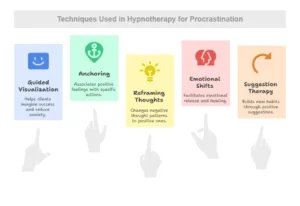 Guided Visualization and Mental Rehearsal
We’ve all imagined a situation so clearly that it felt almost real. Hypnotherapy uses that same principle. By picturing yourself starting and completing tasks successfully, you condition your mind to believe action is possible—and even expected. Just like athletes mentally rehearse before competing, you rehearse productivity until it feels natural.
Anchoring and Positive Reinforcement
Anchoring links a small physical action—like touching your thumb and finger—to a mental state of focus or motivation. Once set, repeating the gesture can instantly bring back that state, like flipping a switch. Alongside anchoring, positive reinforcement strengthens the reward cycle in your mind, so finishing even small tasks feels good and builds momentum.
Reframing Negative Thoughts
Procrastination feeds on thoughts like “I’m not ready” or “What if I fail?” In hypnotherapy, those scripts are reworked into supportive ones, such as “I can take this step now” or “Progress is better than perfect.” Changing the internal dialogue reduces resistance and makes starting less intimidating.
Creating Emotional Shifts
Often it’s the feeling tied to a task—not the task itself—that causes avoidance. Hypnotherapy helps reset those emotional triggers so stress, boredom, or dread are replaced with calmer, more neutral feelings. When the emotional weight drops, action feels less like a battle.
Suggestion Therapy for Habit Building
Finally, hypnotherapists use suggestion therapy to plant new habits at a subconscious level. Through repetition, your mind begins to accept ideas like “I start tasks right away” or “I stay focused until I finish.” Over time, these suggestions shape behavior, turning productivity into a natural routine instead of a constant struggle.
Practical Benefits of Hypnotherapy for Overcoming Procrastination
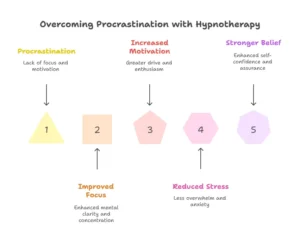 Hypnotherapy doesn’t just help you get started on tasks—it changes the way your mind responds to them. The biggest wins often come from small but powerful shifts in focus, confidence, and habits. Here’s what people commonly experience:
Improved Focus and Mental Clarity
When your mind isn’t cluttered with second-guessing or distractions, it’s easier to lock in on what matters. Hypnotherapy helps quiet that inner noise so you can actually sit down and get things done without constantly bouncing to something else.
Greater Motivation and Drive
Instead of forcing yourself to act, hypnotherapy reconnects you with the why behind your goals. Once the link between effort and reward feels stronger, motivation stops being something you chase—it starts showing up naturally.
Reduced Stress and Overwhelm
A lot of procrastination comes from feeling like a task is “too much.” Hypnotherapy lowers the stress response tied to work, so tasks don’t feel so heavy. With the pressure dialed down, starting becomes less of a fight.
Stronger Self-Belief
Doubt is one of procrastination’s favorite tools. If you believe you’ll mess up, you’ll delay. Hypnotherapy helps replace those limiting beliefs with confidence, making it easier to trust yourself and take action without hesitation.
Long-Term Habit Formation
Quick fixes fade, but subconscious changes stick. By rewiring how you respond to tasks, hypnotherapy helps you build habits that last—like starting sooner, staying consistent, and finishing what you begin. Over time, productivity stops feeling forced and becomes your default mode.
Integrating Hypnotherapy Into Daily Life
How Many Sessions Are Typically Needed
Some people notice a shift after just one session, while others need several to really lock in new habits. Think of it like training a muscle—the more consistent you are, the stronger the results. A short series of sessions spread over weeks often gives your subconscious the time it needs to rewire old patterns.
Combining Hypnotherapy With Everyday Strategies
Hypnotherapy is powerful on its own, but pairing it with simple productivity habits makes the change even stronger. Time-blocking, keeping tasks bite-sized, or having an accountability partner can all reinforce the mental shifts you build in sessions. Lifestyle basics like good sleep, exercise, and balanced meals also support clearer focus and energy.
Choosing the Right Hypnotherapist
Working with someone experienced makes the process smoother. Look for a certified hypnotherapist who has worked with procrastination or habit change before. Don’t be afraid to ask questions—like how they run sessions, what approach they use, and what kind of results you can expect. You should feel comfortable and supported, since trust plays a big role in the process.
Conclusion
Procrastination may feel like a bad habit you can’t shake, but underneath it’s usually old patterns and beliefs running on autopilot. That’s why willpower alone often fails—you’re pushing against the very part of your mind that’s wired to resist.
Hypnotherapy works differently. By reaching the subconscious, it helps clear the mental roadblocks, shift negative emotions, and rebuild confidence where doubt once lived. The result isn’t just checking things off a to-do list—it’s changing the way you approach tasks altogether.
When paired with simple daily strategies like time-blocking or accountability, hypnotherapy creates lasting change. Instead of constant stress and guilt, you begin to feel lighter, more focused, and more in control of your time.
Breaking the cycle of procrastination doesn’t happen overnight, but it does start with one choice—the choice to do something different. Hypnotherapy can be that difference, helping you trade delay for momentum and hesitation for progress.