
How to Stop Binge Eating and Build a Healthier Relationship with Food
Binge eating is more than just eating too much now and then — it’s feeling out of control around food, often eating large amounts quickly, and feeling guilty or upset afterward. It can affect your body, mood, and confidence, leaving you stuck in a frustrating cycle.
Many people binge when they’re stressed, lonely, or upset, or after long periods of dieting or skipping meals. It’s not about willpower — it’s about unmet needs, both physical and emotional.
The good news? You can break free. In this guide, we’ll show you simple, proven steps to help you understand why you binge, how to break the pattern, and when to get help if you need it. Let’s dive in and give you the tools to move forward with confidence.
Understanding Binge Eating
Binge eating can feel like a trap — one moment you’re reaching for comfort, the next you’re left feeling stuffed, guilty, and frustrated. It’s not about lack of willpower; it’s often a response to stress, emotions, or strict dieting. The good news is you’re not alone, and there are real, simple steps you can take to break the cycle and start feeling better. Let’s explore how.
What Is Binge Eating?
Binge eating means eating a large amount of food in a short time, often feeling unable to stop even when full or uncomfortable. It’s not the same as overeating at a party or holiday — it’s marked by a loss of control. People may eat quickly, in private, or until they feel stuffed, then feel guilt, regret, or shame afterward.
Unlike other eating issues, binge eating isn’t always followed by purging or extreme exercise, but the emotional weight can be heavy. Recognizing these signs is the first step to making a change.
Common Triggers of Binge Eating
Binge eating often starts from more than just hunger.
- Emotional triggers: Stress, sadness, or boredom can push someone to seek comfort in food. It becomes a way to cope, not just a response to an empty stomach.
- Environmental triggers: Skipping meals, keeping tempting foods close by, or following strict diets can set up the urge to binge. When the body feels deprived, it fights back with cravings.
- Psychological factors: Perfectionism or negative body image can increase pressure. People may feel trapped in a cycle of “I’ve already messed up, so why stop now,” which only feeds the habit.
How Binge Eating Affects Your Health
Binge eating doesn’t just affect weight; it impacts your whole well-being.
Physically, it can lead to weight ups and downs, stomach pain, and digestive problems. Emotionally, it brings feelings of guilt, anxiety, and low self-esteem, which can make the cycle even harder to break.
Socially, people may pull away from friends or avoid events out of embarrassment or fear of eating in public. This isolation adds to the emotional burden.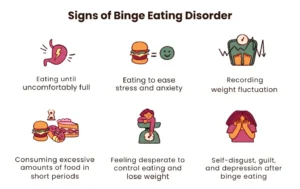
Signs of Binge Eating Disorder
If you often feel out of control around food, eat large amounts in a short time, and feel guilt or shame afterward, these may be signs of binge eating disorder and a signal that extra support could help.
Five Proven Strategies to Stop Binge Eating
Stopping binge eating isn’t about willpower — it’s about breaking old patterns and building new habits. With a few simple, steady changes, you can start feeling more in control and at peace with food. Let’s look at some practical steps to help you get there.
Break the Restrict-Binge Cycle
Strict dieting can leave you hungry, frustrated, and more likely to binge. When your body feels deprived, it fights back with cravings that are hard to ignore. Instead of skipping meals or cutting out entire food groups, focus on eating regular, balanced meals and snacks. Giving your body steady fuel helps prevent the “all or nothing” cycle that leads to overeating.
Practice Mindful Eating
Many binges happen when we eat on autopilot — fast, distracted, and disconnected from how we feel. Slow down. Notice when you’re hungry, pay attention as you eat, and stop when you’re comfortably full. Put away your phone, turn off the TV, and focus on your food. This helps you enjoy meals more and gives your body a chance to signal when it’s had enough.
Address Emotional Triggers
Binge eating often isn’t about food — it’s about emotions. Next time you feel the urge to eat, pause and check in: are you actually hungry, or are you feeling stressed, lonely, or upset? If it’s emotional, try a healthy coping tool like journaling, walking, deep breathing, or calling someone you trust. Breaking that emotion-food link takes practice but makes a big difference.
Restructure Your Environment
Set up your surroundings to support healthier choices. Keep binge-trigger foods out of sight or limit how much you keep at home — but don’t label any food as completely “off-limits,” which can make it more tempting. Planning meals and snacks ahead of time helps reduce last-minute decisions and makes it easier to stay on track.
Focus on Progress, Not Perfection
Be patient with yourself. Stopping binge eating is not about being perfect; it’s about making steady progress. Some days will be easier than others — that’s normal. Celebrate small wins, like eating one mindful meal or handling a craving without giving in. Each step forward builds confidence and helps you feel more in control over time.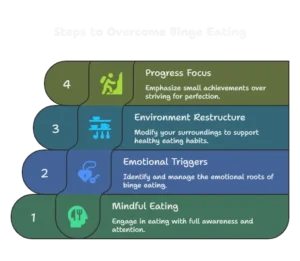
How to Build a Positive Relationship with Food
Start by letting go of the idea that food is “good” or “bad.” When you label foods this way, you create guilt around eating, which can trigger the urge to binge. Instead, think of food as fuel and enjoyment — both matter, and both have a place in your life.
Notice your inner voice. If you catch yourself thinking, “I blew it, so why stop now?” or “I’ll fix this by skipping meals tomorrow,” pause. These harsh thoughts keep you stuck. Replace them with kinder, more realistic ones, like “One meal doesn’t define me” or “I can make a better choice next time.”
Also, shift your focus from punishment to care. Eating well isn’t about control; it’s about giving your body what it needs to feel strong and satisfied. Celebrate small wins, like listening to your hunger cues or enjoying a meal without guilt. These little changes build trust in yourself over time.
When and How to Seek Professional Help
Sometimes, no matter how hard you try, binge eating feels too heavy to handle alone — and that’s okay. If binges happen often, cause you distress, or affect your daily life, it’s a good time to reach out for help.
Therapists trained in eating issues can help you understand why you binge and teach practical ways to manage it. Cognitive Behavioral Therapy (CBT) is one common approach that helps change the thoughts and habits that fuel binge eating. Some people also find support groups or online communities helpful because they show you that you’re not alone.
In some cases, your doctor may check for physical concerns tied to eating patterns, like blood sugar issues or digestive problems. Reaching out for help isn’t a sign of weakness — it’s a smart step that can speed up your progress and give you extra tools to break free.
Conclusion
Breaking free from binge eating isn’t about being perfect — it’s about learning, adjusting, and showing yourself patience along the way. Every small step you take, whether it’s eating a regular meal, recognizing an emotional trigger, or speaking kindly to yourself, moves you closer to lasting change.
Remember, healing your relationship with food isn’t just about stopping binges; it’s about building trust with yourself and feeling more at ease in your own body. You deserve to enjoy food without fear or guilt and to live a life that’s not ruled by the next craving or slip-up. Be gentle with yourself, reach out when you need support, and keep moving forward — progress comes with practice, not perfection.