
How Hypnotherapy Helps Students Reduce Exam Stress and Improve Performance
Exams have a way of making even the calmest student feel uneasy. You’ve studied hard, yet the night before the test your mind won’t stop racing. Your heart beats faster, your hands get sweaty, and suddenly all that preparation feels like it might slip away. This is exam stress—and almost every student has faced it.
The challenge is that stress doesn’t just make you feel nervous; it can block your memory, cloud your focus, and even make simple questions seem impossible. That’s where hypnotherapy comes in. Instead of forcing yourself to “just calm down,” hypnotherapy trains your mind to relax, rebuilds your confidence, and helps you approach exams with clarity.
Think of it like giving your brain a reset button before and during high-pressure situations. The goal isn’t just to get through one exam, but to build lasting tools that make studying, recalling information, and staying calm a lot easier.
In the next sections, we’ll break down how exam stress works, how hypnotherapy helps, and the specific techniques students can start using right away to succeed.
What Is Exam Stress and Why It Matters
Understanding Exam Stress in Students
Every student knows the pressure of exam season. For some, it shows up as constant worry about grades or the fear of letting others down. For others, it’s that sinking feeling when you sit at your desk, open the test, and your mind suddenly goes blank. Exam stress often comes from:
- Fear of failure or disappointing results.
- Heavy workload and tight deadlines.
- Pressure from parents, teachers, or peers.
- Comparing yourself to others and feeling “not good enough.”
Unlike everyday stress, exam stress hits at a very specific time—right when you need your focus and memory to work their best.
Effects of Exam Stress on Performance
- Memory blocks: Even when you’ve studied hard, anxiety can make it hard to recall information.
- Loss of focus: Your mind jumps from one thought to another, making it harder to concentrate on questions.
- Negative thinking: Thoughts like “I’m going to fail” or “I can’t do this” can take over and lower confidence.
- Physical effects: Trouble sleeping, headaches, or a racing heartbeat can leave you drained before the exam even starts.
That’s why managing exam stress isn’t just about “relaxing”—it’s about giving your brain and body the right tools to stay calm and perform at their best.
What Is Hypnotherapy for Exam Stress?
Exams don’t just test knowledge—they test nerves. Many students prepare well but still freeze under pressure, which is where hypnotherapy steps in as a surprising yet powerful tool.
Defining Hypnotherapy in the Context of Exams
When most people hear hypnosis, they imagine stage shows or mind tricks, but clinical hypnotherapy is very different. It’s a safe practice where a trained therapist guides you into a calm, focused state—almost like deep daydreaming. In this state, your mind is more open to suggestions that can reduce stress and boost confidence.
For exam stress, the goal of hypnotherapy is simple: help your brain stop treating exams as a threat and start approaching them with clarity and calm.
How Hypnotherapy Reduces Exam Stress
- Calms the body: Breathing and relaxation lower nervous tension.
- Shifts negative thinking: Turns “I’ll fail” into “I can handle this.”
- Builds confidence: Repeated practice reinforces a sense of control on exam day.
- Improves focus: Helps block out distractions and stay present with the test.
 It’s like mental training for students—just as athletes prepare their minds for performance, hypnotherapy gives students a way to manage exam stress and succeed under pressure.
Hypnotherapy Techniques for Exam Stress
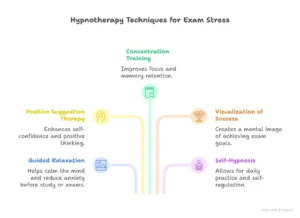
Exams can feel like a mental marathon, but hypnotherapy offers tools that make the journey easier. Here are five practical techniques that students can use to manage exam stress and perform at their best:
1. Guided Relaxation Before Study or Exams
Short hypnosis sessions help calm racing thoughts and relax tense muscles. Many students use recordings or therapist-led sessions before studying or on exam mornings to create a sense of calm readiness.
2. Positive Suggestion Therapy
This technique replaces fear with confidence. Under hypnosis, the mind absorbs affirmations like “I am prepared” or “I can recall what I studied.” Over time, these messages become the natural response to exam pressure.
3. Concentration and Memory Training
Hypnotherapy can sharpen recall by teaching the brain to organize and retrieve information more effectively. Students often find it easier to focus during study sessions and remember details during tests.
4. Visualization of Exam Success
Mental rehearsal plays a big role in performance. Hypnotherapy guides students to imagine themselves walking into the exam hall, staying calm, and confidently answering questions—training the brain to expect success instead of fear.
5. Self-Hypnosis for Daily Practice
Students can learn simple self-hypnosis routines to use on their own. Just a few minutes of focused breathing, relaxation, and positive suggestion each day can reduce anxiety and boost confidence throughout exam season.
 Benefits of Hypnotherapy for Exam Stress
Short-Term Benefits
- Instant calmness: Helps reduce anxiety right before or during a test.
- Better sleep: Relaxation techniques improve rest during exam week.
- Sharper focus: Makes it easier to stay on track while studying.
- Memory boost: Increases recall when you’re under pressure.
Long-Term Benefits
- Less test anxiety overall: Each session builds confidence for future exams.
- Stronger self-belief: Positive suggestions help students trust their preparation.
- Improved coping skills: Stress-handling techniques carry over into daily life.
- Academic resilience: Students become better prepared to face challenges beyond one exam season.
Integrating Hypnotherapy Into Study Routines
Hypnotherapy works best when it becomes part of a student’s daily habits instead of a one-time fix. Here’s how it can fit naturally into study routines:
Pairing Hypnotherapy with Study Habits
- Reinforce schedules: Hypnotherapy can strengthen commitment to a study plan, making it easier to stick with.
- Beat procrastination: Suggestions focused on productivity help reduce the urge to delay studying.
- Stay consistent: Short self-hypnosis sessions before study time create a “study-ready” mindset.
Lifestyle Support for Exam Stress Relief
- Better sleep: Evening relaxation hypnosis improves rest, which is key for memory.
- Healthy balance: Pairing hypnotherapy with exercise, good nutrition, and short study breaks boosts overall performance.
- Daily calm moments: Even five minutes of self-hypnosis can reset stress levels during long study days.
Safety and Suitability of Hypnotherapy for Exam Stress
Some students (and parents) worry that hypnosis might be unsafe or controlling, but clinical hypnotherapy is very different from what you see on stage. It’s a guided process that keeps students in control at all times.
Addressing Common Concerns
- “Will I lose control?” No—students stay aware and can stop the session at any time.
- “Is it mind control?” Absolutely not. Hypnotherapy simply helps focus the mind on positive suggestions.
- “Is it safe for teenagers?” Yes—when done with a qualified professional, it’s considered safe for high school and college students.
Who Benefits the Most
- Students with test anxiety: Those who freeze up even after preparing well.
- High school and college students: Facing entrance exams, finals, or standardized tests.
- Students with ADHD or focus challenges: Hypnotherapy can improve concentration and reduce distraction.
Practical Steps to Start Hypnotherapy for Exam Stress
Getting started with hypnotherapy doesn’t have to be complicated. Students can explore a few different options depending on their needs and budget:
Finding a Qualified Hypnotherapist
- Look for certified practitioners who specialize in academic or exam stress.
- Ask about their experience with students and stress-related issues.
- Check reviews or recommendations before booking sessions.
Affordable Options for Students
- Self-hypnosis recordings: Many apps and online programs provide exam-stress–focused sessions.
- Group sessions: Some schools or wellness centers offer workshops at lower costs.
- Short sessions: Even brief guided practices can be effective if done consistently.
Building Consistency
- Start early—don’t wait until the night before an exam.
- Practice regularly, even 10 minutes a day, to train the mind for calm and focus.
- Combine hypnotherapy with healthy study and lifestyle habits for best results.
Conclusion
Exam stress is something almost every student faces, but it doesn’t have to control the outcome. Hypnotherapy for exam stress gives students the tools to stay calm, sharpen focus, and walk into the test room with confidence. From guided relaxation to self-hypnosis, these techniques help the mind handle pressure in a healthier way.
The real value goes beyond one exam—it’s about building skills that make studying easier, recalling information smoother, and future challenges less overwhelming. With practice and consistency, hypnotherapy can turn exam season from a source of fear into an opportunity to succeed.
If exams leave you anxious, know that support exists. Hypnotherapy may be the simple shift that helps you not just pass, but perform at your best.