

How Hypnotherapy Builds Discipline and Lasting Habits
Most people start new goals full of energy—hitting the gym, waking up early, eating better—but a few weeks later, the drive fades. It’s not because they’re lazy or weak; it’s because old mental habits quietly take over. Your subconscious runs the show more than you think, repeating familiar patterns even when you consciously want change.
Think of it like trying to steer a car with the parking brake on—you’re pushing forward, but something unseen keeps holding you back. That “something” lives deep in the mind, where beliefs and habits are stored.
This is where hypnotherapy comes in. Instead of fighting your old routines with willpower, hypnotherapy helps reprogram your subconscious to support your goals. It teaches your mind to make discipline feel natural—so following through becomes easier and more consistent.
Whether you’re in Edmonton trying to stay focused at work, quit smoking, or build healthier routines, hypnotherapy can help you strengthen discipline from the inside out. In this guide, you’ll learn how it works, why it’s effective, and what to expect from a session at Anali Nicolle Hypnotherapy.
Understanding Why Habits Control 95% of Your Daily Actions
Have you ever caught yourself scrolling your phone without realizing it or grabbing a snack you didn’t plan to eat? That’s your subconscious at work. Studies show that nearly 95% of what we do every day runs on autopilot—powered by habits, not conscious choices.
How Habits Are Wired in the Brain
Habits form through repetition. Each time you repeat an action, your brain builds a shortcut—a connection between cue, action, and reward. Eventually, your mind learns to respond automatically. For example, if you drink coffee every time you feel tired, your brain begins to associate fatigue with reaching for caffeine. The more you repeat the cycle, the stronger it becomes.
These loops aren’t bad by themselves—they help you drive, walk, and function without overthinking. But when the loop supports procrastination, self-doubt, or emotional eating, it becomes a silent roadblock.
Why Willpower Alone Fails
Most people try to break bad habits by “trying harder.” The problem is that willpower works only at the conscious level, while habits live deep in the subconscious. It’s like deleting a shortcut from your desktop but keeping the program running in the background—it keeps restarting.
Stress, fatigue, and emotion make it even harder. When your mind is tired, it takes the easiest path—the one already wired in. That’s why we revert to old routines after a long day, even with the best intentions.
How Hypnotherapy Changes the Pattern
Hypnotherapy steps in where willpower stops. It helps quiet the conscious mind and communicates directly with the subconscious—the part responsible for automatic behaviors. Instead of forcing change, it reprograms the pattern itself.
Through guided relaxation and positive suggestions, hypnotherapy helps your brain build new associations—linking discipline with satisfaction instead of struggle. Over time, this rewiring makes consistency feel natural, not forced.
How Hypnotherapy Reprograms Your Subconscious for Discipline
Discipline isn’t about constant effort—it’s about creating the right mental environment where consistency feels natural. Hypnotherapy helps you reach that point by communicating directly with the subconscious mind, where habits and beliefs are stored.
 The Science Behind the Hypnotic State
During hypnosis, your body relaxes while your mind becomes highly focused and receptive. It’s similar to the state you enter right before sleep or deep meditation—your brain slows down, and your awareness turns inward. In this state, old thought patterns become flexible, making it easier to reshape them.
You’re still awake, aware, and in control the entire time. The idea isn’t to “lose control” but to bypass the constant mental chatter that often resists change. Think of it as clearing static so you can communicate directly with the part of your mind that runs your daily behavior.
Rewiring the Habit Loop
Every habit—good or bad—follows a simple loop: cue, action, and reward. Hypnotherapy helps rewrite this loop by changing the emotional meaning attached to each step. For example, instead of feeling stressed and reaching for a cigarette or snack, you begin to associate calm with breathing or movement.
A trained hypnotherapist guides this shift through positive suggestions and visualization. These mental rehearsals teach your subconscious that new responses are safer and more rewarding. Over time, your brain starts choosing these responses automatically—without effort.
Real-Life Transformation Example
Take someone who constantly struggles with procrastination. In hypnotherapy, they might uncover a deeper belief like “I’ll fail anyway.” Once that belief is reframed into “I complete tasks with ease,” their behavior naturally aligns. They start taking action—not through willpower, but because their inner dialogue has changed.
Why This Approach Works
Hypnotherapy doesn’t fight against the mind’s habits—it works with them. By accessing the subconscious directly, it helps replace resistance with acceptance. As a result, self-discipline starts to feel like second nature, not a daily battle.
The 3 Steps Hypnotherapy Uses to Build Discipline That Lasts
Building discipline through hypnotherapy happens in three key stages: awareness, reprogramming, and reinforcement. Each step works with the subconscious mind to remove resistance and strengthen new, supportive habits.
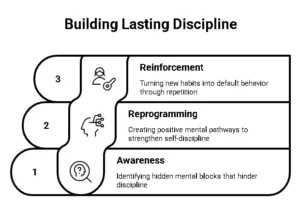 1. Awareness: Identifying Hidden Mental Blocks
Change begins with understanding what’s holding you back. Most people struggle with discipline not because they lack effort, but because of unrecognized beliefs like “I’m not consistent” or “I always give up.” These quiet thoughts sit beneath the surface, shaping behavior without notice.
During hypnotherapy, the mind relaxes enough to bring these beliefs into awareness. You start to see patterns—like procrastinating when tasks feel uncomfortable or doubting your ability to follow through. Recognizing these patterns is the first step to replacing them.
A skilled hypnotherapist helps you see these thoughts as outdated programs, not truths. This creates mental space for new, supportive beliefs that align with your goals.
2. Reprogramming: Creating Positive Mental Pathways
Once the mental blocks are clear, hypnotherapy introduces new ideas that strengthen self-discipline. Through guided visualization and affirmations, your subconscious begins linking discipline with confidence instead of pressure.
For example, phrases like “I stay consistent with ease” or “I complete what I start” are repeated during hypnosis. Over time, these statements reshape how you see yourself. The brain starts accepting them as normal, which influences daily behavior naturally.
This stage also focuses on changing emotional triggers. If you once associated effort with stress or boredom, hypnotherapy replaces that feeling with calm focus and satisfaction. Discipline starts feeling good instead of heavy.
3. Reinforcement: Turning New Habits Into Your Default Mode
The final step is repetition. Just like learning any skill, the subconscious needs consistency to lock in new behavior. Follow-up sessions, short self-hypnosis exercises, or recorded audio tracks help reinforce the changes between appointments.
Reinforcement turns progress into permanence. Each repetition strengthens the mental link between intention and action until consistency becomes automatic.
Many clients at Anali Nicolle Hypnotherapy in Edmonton combine this step with small, practical habits—like keeping a daily routine or journaling their wins—to keep momentum strong.
With this foundation, discipline stops being something you fight for and becomes part of who you are.
Practical Ways to Use Hypnotherapy for Habit Change in Edmonton
Hypnotherapy works best when it becomes part of your daily routine, not a one-time fix. Whether you want to improve focus, stop procrastinating, or follow through with healthier habits, combining professional guidance with small daily actions helps your results stick.
Work with a Certified Hypnotherapist
The most effective way to start is through one-on-one sessions with a qualified professional. At Anali Nicolle Hypnotherapy in Edmonton, each session begins with a short discussion about your goals and challenges. This helps identify the habits or beliefs standing in your way.
From there, you’re guided into a calm, focused state where your subconscious becomes open to positive suggestions. You might visualize yourself completing tasks easily, choosing healthier options, or staying calm under stress. These mental rehearsals begin rewiring your brain to make those actions feel natural.
Each session builds on the last, deepening your mental alignment with discipline and consistency. Most clients notice small but meaningful improvements—feeling more focused, motivated, and in control of their actions—after just a few sessions.
Practice Self-Hypnosis Between Sessions
Self-hypnosis is a simple way to strengthen progress between appointments. It involves relaxing your body, focusing on your breathing, and repeating short, clear statements that align with your goals.
For example:
- “I stay consistent even when things get uncomfortable.”
- “Every day, I follow through with ease.”
Set aside 10–15 minutes daily in a quiet space. Listening to guided audios from your hypnotherapist or using recordings created during your sessions can help you stay on track. Over time, these repetitions deepen the new mental pathways formed in therapy.
Combine Hypnotherapy with Everyday Strategies
Hypnotherapy becomes even more effective when paired with small, consistent lifestyle actions. Here’s how to integrate it into your daily life:
- Track your habits: Use a simple checklist to reinforce new behaviors.
- Adjust your environment: Keep reminders of your goals visible—like sticky notes, alarms, or a journal.
- Practice mindfulness: Spend a few minutes each day noticing your thoughts without judgment. This keeps your awareness sharp and helps prevent relapse into old patterns.
- Celebrate progress: Even small wins signal to your subconscious that you’re succeeding, which strengthens new habits faster.
By combining hypnotherapy with conscious effort, you create a feedback loop that speeds up change.
Common Misconceptions About Hypnotherapy (And What’s True)
Many people hesitate to try hypnotherapy because of myths and outdated ideas. In reality, it’s a safe, practical, and proven method for changing habits. Let’s clear up a few common misunderstandings so you can see how it really works.
“Hypnosis Takes Away Control”
This is one of the biggest misconceptions. In therapy, you remain completely aware and in control the entire time. You can open your eyes, speak, or stop at any point. Hypnotherapy doesn’t make you do anything you don’t want to—it simply helps you focus deeply so your mind becomes more receptive to positive suggestions.
It’s more like a guided conversation with your subconscious than being “put under.” You stay active in the process, which is why people often leave sessions feeling calm, clear, and more empowered.
“It Works Instantly”
Real change takes consistency. While many people notice a difference after one or two sessions—such as feeling calmer or more motivated—lasting discipline builds over time. Hypnotherapy helps rewire thought patterns, and just like forming a new habit, repetition matters.
Each session reinforces progress, helping your mind accept new ideas as normal. Think of it as training your brain to choose better responses automatically, rather than waiting for a single “aha” moment.
“Only Certain People Can Be Hypnotized”
Almost anyone can benefit from hypnotherapy if they’re open and willing to participate. You don’t need to be “weak-minded” or overly suggestible. In fact, people who are analytical, self-aware, and motivated for change often do best because they actively engage with the process.
It’s less about being hypnotized and more about allowing yourself to relax and focus. The more comfortable and curious you are, the easier your mind accepts new ideas that support your goals.
“It’s Like Stage Hypnosis”
Stage hypnosis and clinical hypnotherapy are completely different. Stage acts are entertainment; they’re meant to impress an audience. Clinical hypnotherapy is a therapeutic process led by a certified professional who focuses on your well-being and mental conditioning.
At Anali Nicolle Hypnotherapy in Edmonton, every session is private, safe, and centered on helping you create meaningful change—no tricks or gimmicks, just a structured method to retrain your thoughts and habits.
Clearing these misconceptions helps you approach hypnotherapy with the right mindset—open, informed, and confident.
The Real Benefits of Building Discipline Through Hypnotherapy
Building discipline through hypnotherapy goes far beyond motivation. It reshapes how your mind reacts to challenges, helping you stay consistent without feeling forced. As old patterns fade, you naturally start acting in ways that align with your goals. Here’s what that transformation looks like in real life.
Improved Focus and Follow-Through
After hypnotherapy, many people find it easier to concentrate and complete what they start. By calming mental noise and strengthening attention, the mind becomes less distracted. You stop overthinking and start acting. Small daily tasks—like finishing work on time or sticking to a workout—begin to feel smoother and more automatic.
Less Procrastination and More Momentum
Procrastination often hides behind fear, perfectionism, or self-doubt. Hypnotherapy helps release those emotional barriers. Once those blocks loosen, taking action feels lighter and more natural. You stop delaying progress and start moving forward with less resistance.
Better Emotional Control
Discipline weakens when emotions take over. Hypnotherapy teaches your subconscious to respond calmly instead of reacting impulsively. Over time, frustration, boredom, or anxiety lose their power to throw you off track. You become more grounded under pressure, which helps you maintain consistency even during stressful times.
Stronger Motivation From Within
Unlike quick boosts from external motivation, hypnotherapy strengthens inner drive. It connects your goals to deeper emotional meaning, making discipline feel rewarding. You start enjoying structure because it brings you peace and pride, not pressure.
Long-Term Behavior Change
What makes hypnotherapy effective is how it works with your brain’s natural learning process. The new associations you build during sessions gradually replace the old ones that caused resistance. Once that shift happens, discipline stops feeling like effort—it becomes who you are.
Many clients describe it as “feeling lighter” or “finally being able to follow through without forcing it.” That’s the real power of subconscious reprogramming—change that lasts.
How Long Before You Notice Change?
Everyone’s experience with hypnotherapy is slightly different, but most people begin to notice mental shifts within the first few sessions. You may feel calmer, more focused, or more willing to take action. These small improvements often signal that your subconscious is beginning to accept new ideas.
Typical Progress Timeline
In general, early results appear within one to three sessions as your mind starts adjusting. Deeper and more permanent change usually takes six to ten sessions, depending on how deeply the old patterns are wired. Each session builds on the last, reinforcing the new habits until they become automatic.
Think of it like strengthening a muscle. The more consistently you practice the new mindset, the stronger it becomes. Repetition—through sessions, self-hypnosis, or listening to guided recordings—helps lock in the progress.
What Affects Your Speed of Change
Several factors influence how quickly results show:
- Mindset and openness: Being ready to change allows the process to work faster.
- Frequency of practice: Regular reinforcement through audio or self-hypnosis deepens results.
- Therapist experience: Working with a certified professional, like Anali Nicolle Hypnotherapy in Edmonton, ensures the process is guided effectively.
- Type of habit: Simple habits may shift in a few weeks, while complex emotional patterns may take longer.
Progress isn’t always dramatic—it’s often subtle at first, then steady. You may suddenly realize you’re doing things differently without overthinking them. That’s how you know the change has reached the subconscious level.
Maintaining Momentum After Results
Once you see progress, consistency is key. Continue using short reinforcement sessions, journaling wins, or revisiting guided audios. Even five minutes of daily focus can keep your new habits strong. Over time, these small actions maintain the connection between your goals and your subconscious drive.
Conclusion: Discipline Isn’t Learned—It’s Programmed
Discipline isn’t about forcing yourself—it’s about retraining your mind to make consistency feel natural. Hypnotherapy helps shift the subconscious patterns that cause resistance, so following through becomes automatic.
Willpower fades, but reprogramming lasts. By working directly with the subconscious, hypnotherapy removes the mental blocks that keep you stuck and builds calm focus, motivation, and steady action.
If you’re ready to stop restarting and finally stay consistent, Anali Nicolle can help you make that change—by aligning your mind with the habits you want to live by every day.